Mélodie Ruvio
Alto
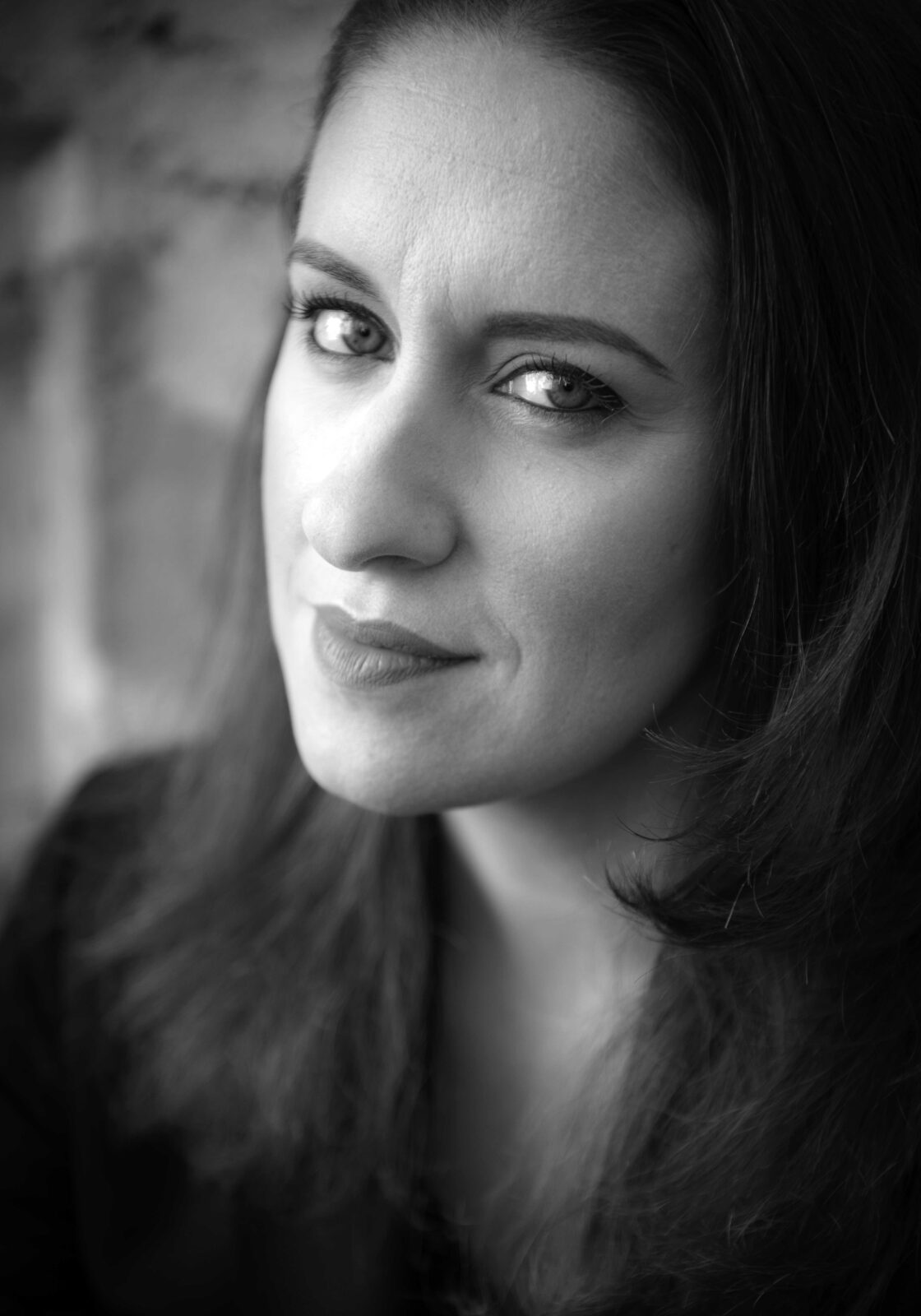
After 10 years as a recorder player and a degree in Spanish, Mélodie Ruvio returned to the CRR in Paris as a member of the JeuneChoeur de Paris (founded by Laurence Equilbey), where she obtained her DEM diploma in singing.
In the title role of La Folie in Destouches' Le Carnaval et la Folie at the Académie d'Ambronay under Hervé Niquet, she immediately attracted attention and performed at the Opéra Comique in Paris and the Capitole in Toulouse, where critics praised her warm, sensuous voice and her elegant musicianship. This debut opened many doors, and she was soon singing the Handel roles of Cornelia in Giulio Cesare and Disinganno in Il Trionfo del Tempo e del Disinganno, the Third Lady in Mozart's Die Zauberflöte, Fedra and Venere in Cavalli's Egisto, Venere in Monteverdi's Il Ballo delle ingrate, and Mastrilla and Ninetta in Offenbach's La Périchole, working with conductors such as Marc Minkowski, David Reiland, Roberto Fores Veses, Alexis Kossenko, Vincent Dumestre, Joël Suhubiette and Facundo Agudin.
Mélodie's voice is also particularly well suited to the sacred concert and oratorio repertoire, and she is regularly invited to sing a wide range of works, from Bach, Vivaldi, Scarlatti and Charpentier to Mozart and Mendelssohn, with conductors such as William Christie, Paul Agnew, Françoise Lasserre, Rinaldo Alessandrini, Jérôme Correas, David Greilsammer, Sofi Jeannin, Michael Radulescu, Julien Laloux, Sylvain Sartre and Margaux Blanchard, at renowned festivals such as Ambronay, La Chaise-Dieu, Sablé, Bremen Musikfest, Misteria Paschalia and Actus Humanus.
She recently sang Pergolesi's Stabat Mater at the Opéra de Montpellier (replacing an indisposed Nathalie Stutzmann) and the Third Lady in Die Zauberflöte with Hervé Niquet at the Opéra d'Avignon, as well as a programme of Gesualdo madrigals in a solo concert with Paul Agnew and Les Arts Florissants, with whom she works regularly.